Posts tonen met het label Datavault. Alle posts tonen

zondag 24 september 2023

Using Effectivity Satellites in Datavault

Introduction

In this blogpost, I would like to discuss effectivity satellites and particularly in an "Insert only" Datavault 2.0 architecture. You don't want to update in a Datavault 2.0 architecture because updates are expensive (performance). In this blogpost, I'll describe the effectivity satellite logic as described in "Patrick Cuba's book : The Data Vault Guru : a pragmatic guide on building a data vault". A great book with a lot of examples. I used a couple of his queries and tweaked them a bit for this blogpost. 


The code for the effectivity satellite is designed for Snowflake.


The case described

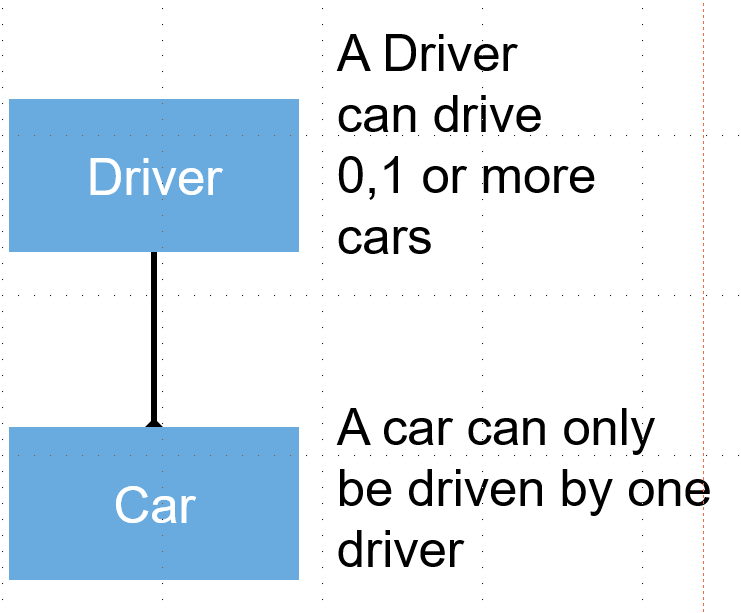
In this blogpost, I've included an example that is easy understandable and is a real world example. Examples like Product, Product category, Account, etc are bit abstract to understand. So, the example is about drivers and cars. In short, a car can only be driven by one person and a driver can drive multiple cars. Now, you can discuss about the defintion, because you can say at a certain moment a car can only be driven by one person and a person can only drive a car at a certain moment. But, for the sake of simplicity : 

"A car can only be driven by one person and a person can drive multiple cars"


So, in 3NF you would draw this diagram:

These are the testsituations I've used for building the effectivity satellite in Snowflake


Step 0 : Starting situation effectivity Satellite

We start with a initial situation. There are three cars with 3 different drivers.


And this is the data model with the records.


This is the Snowflake code :


SET LOADDATE = '2023-09-01';

CREATE OR REPLACE TABLE STAGE_DRIVERCARTABLE (
    DRIVER_CODE VARCHAR(100),
    CAR_CODE VARCHAR(100)
);

INSERT INTO STAGE_DRIVERCARTABLE VALUES
('A', '1'),
('B', '2'),
('C', '3');

CREATE OR REPLACE TABLE HUB_DRIVER (
  DRIVER_HK VARCHAR(100),
  DRIVER_CODE VARCHAR(100),
  LOADDTS TIMESTAMP,
  RECSRC VARCHAR(100)
);

INSERT INTO HUB_DRIVER
SELECT 
    'HASH(' || DRIVER_CODE || ')' AS DRIVER_HK,
    DRIVER_CODE,
    $LOADDATE,
    'CARSYSTEM'
FROM STAGE_DRIVERCARTABLE 
WHERE DRIVER_HK NOT IN (SELECT DRIVER_HK FROM HUB_DRIVER);

CREATE OR REPLACE TABLE HUB_CAR (
  CAR_HK VARCHAR(100),
  CAR_CODE VARCHAR(100),
  LOADDTS TIMESTAMP,
  RECSRC VARCHAR(100)
);

INSERT INTO HUB_CAR
SELECT 
    'HASH(' || CAR_CODE || ')' AS CAR_KEY,
    CAR_CODE,
    $LOADDATE,
    'CARSYSTEM'
FROM STAGE_DRIVERCARTABLE 
WHERE CAR_KEY NOT IN (SELECT CAR_HK FROM HUB_CAR);

CREATE OR REPLACE TABLE LINK_DRIVER_CAR (
  DRIVER_CAR_HK VARCHAR(100),
  DRIVER_HK VARCHAR(100),
  CAR_HK VARCHAR(100),
  LOADDTS TIMESTAMP,
  RECSRC VARCHAR(100)
);

INSERT INTO LINK_DRIVER_CAR
SELECT 
    'HASH(' || CAR_CODE || DRIVER_CODE || ')' AS DRIVER_CAR_KEY,
    'HASH(' || DRIVER_CODE || ')',
    'HASH(' || CAR_CODE || ')', 
    $LOADDATE,
    'CARSYSTEM'
FROM STAGE_DRIVERCARTABLE 
WHERE DRIVER_CAR_KEY NOT IN (SELECT DRIVER_CAR_HK FROM LINK_DRIVER_CAR);

CREATE OR REPLACE TABLE ESAT_DRIVER_CAR (
  DRIVER_CAR_HK VARCHAR(100),
  EFFECTIVE_FROM TIMESTAMP,
  EFFECTIVE_TO TIMESTAMP,  
  LOADDTS TIMESTAMP,
  RECSRC VARCHAR(100)
);

INSERT INTO ESAT_DRIVER_CAR
WITH CTE_CURRENT_EFFECTIVITY AS (
    SELECT 
    SUBQ1.DRIVER_CAR_HK,
    SUBQ1.EFFECTIVE_FROM,
    SUBQ1.EFFECTIVE_TO,
    SUBQ1.LOADDTS
    FROM 
        (
        SELECT 
        ESAT.DRIVER_CAR_HK,
        ESAT.EFFECTIVE_FROM,
        ESAT.EFFECTIVE_TO,
        ESAT.LOADDTS,
        RANK() OVER (PARTITION BY ESAT.DRIVER_CAR_HK ORDER BY ESAT.EFFECTIVE_FROM, ESAT.LOADDTS DESC) AS DV_RANK
        FROM ESAT_DRIVER_CAR ESAT) SUBQ1
    INNER JOIN LINK_DRIVER_CAR LNK ON SUBQ1.DRIVER_CAR_HK = LNK.DRIVER_CAR_HK
    WHERE DV_RANK = 1 AND EFFECTIVE_TO = TO_TIMESTAMP_NTZ('9999-12-31')
),
CTE_NEW_EFFECTIVITY AS(
    SELECT 
        'HASH(' || CAR_CODE || DRIVER_CODE || ')'      AS DRIVER_CAR_KEY,
        $LOADDATE                                   AS EFFECTIVE_FROM,
        '9999-12-31'                                   AS EFFECTIVE_TO,
        $LOADDATE                                   AS LOADDTS,
        'CARSYSTEM'                                    AS RECSRC
    FROM STAGE_DRIVERCARTABLE 
    WHERE DRIVER_CAR_KEY NOT IN (SELECT DRIVER_CAR_HK FROM CTE_CURRENT_EFFECTIVITY)
),
CTE_DELETE_EFFECTIVITY AS (
    SELECT 
        ESAT.DRIVER_CAR_HK               AS DRIVER_CAR_KEY,
        LAST_VALUE(ESAT.EFFECTIVE_FROM) OVER (PARTITION BY ESAT.DRIVER_CAR_HK ORDER BY ESAT.EFFECTIVE_FROM, ESAT.LOADDTS DESC) AS EFFECTIVE_FROM,
        $LOADDATE                        AS EFFECTIVE_TO,                
        $LOADDATE                        AS LOADDTS,
        'CARSYSTEM'                      AS RECSRC
    FROM CTE_CURRENT_EFFECTIVITY ESAT
    WHERE DRIVER_CAR_KEY NOT IN (
        SELECT 'HASH(' || CAR_CODE || DRIVER_CODE || ')' AS STG_DRIVER_CAR_KEY
        FROM STAGE_DRIVERCARTABLE
    )
)
SELECT 
    DRIVER_CAR_KEY AS DRIVER_CAR_HK,
    EFFECTIVE_FROM,
    EFFECTIVE_TO,
    LOADDTS,
    RECSRC
FROM CTE_NEW_EFFECTIVITY
UNION ALL
SELECT     
    DRIVER_CAR_KEY AS DRIVER_CAR_HK,
    EFFECTIVE_FROM,
    EFFECTIVE_TO,
    LOADDTS,
    RECSRC 
FROM CTE_DELETE_EFFECTIVITY;


And this will result in the following effectivity satellite table :


So this is the starting situation. Now, continue with the next step.


Situation 1 : Driver A owns now a new car with VIN 4

Let's start with a simple change. Driver A drives a new car with VIN 4. He/she still drives the old car with VIN  number 1.


The datamodel with the records :


And this is the code for a new day (2023/09/02) :


SET LOADDATE = '2023-09-02';

CREATE OR REPLACE TABLE STAGE_DRIVERCARTABLE (
    DRIVER_CODE VARCHAR(100),
    CAR_CODE VARCHAR(100)
);

INSERT INTO STAGE_DRIVERCARTABLE VALUES
('A', '1'),
('B', '2'),
('C', '3'),
('A', '4');

INSERT INTO HUB_DRIVER
SELECT 
    'HASH(' || DRIVER_CODE || ')' AS DRIVER_HK,
    DRIVER_CODE,
    $LOADDATE,
    'CARSYSTEM'
FROM STAGE_DRIVERCARTABLE 
WHERE DRIVER_HK NOT IN (SELECT DRIVER_HK FROM HUB_DRIVER);

INSERT INTO HUB_CAR
SELECT 
    'HASH(' || CAR_CODE || ')' AS CAR_KEY,
    CAR_CODE,
    $LOADDATE,
    'CARSYSTEM'
FROM STAGE_DRIVERCARTABLE 
WHERE CAR_KEY NOT IN (SELECT CAR_HK FROM HUB_CAR);


INSERT INTO LINK_DRIVER_CAR
SELECT 
    'HASH(' || CAR_CODE || DRIVER_CODE || ')' AS DRIVER_CAR_KEY,
    'HASH(' || DRIVER_CODE || ')',
    'HASH(' || CAR_CODE || ')', 
    $LOADDATE,
    'CARSYSTEM'
FROM STAGE_DRIVERCARTABLE 
WHERE DRIVER_CAR_KEY NOT IN (SELECT DRIVER_CAR_HK FROM LINK_DRIVER_CAR);


INSERT INTO ESAT_DRIVER_CAR
WITH CTE_CURRENT_EFFECTIVITY AS (
    SELECT 
    SUBQ1.DRIVER_CAR_HK,
    SUBQ1.EFFECTIVE_FROM,
    SUBQ1.EFFECTIVE_TO,
    SUBQ1.LOADDTS
    FROM 
        (
        SELECT 
        ESAT.DRIVER_CAR_HK,
        ESAT.EFFECTIVE_FROM,
        ESAT.EFFECTIVE_TO,
        ESAT.LOADDTS,
        RANK() OVER (PARTITION BY ESAT.DRIVER_CAR_HK ORDER BY ESAT.EFFECTIVE_FROM, ESAT.LOADDTS DESC) AS DV_RANK
        FROM ESAT_DRIVER_CAR ESAT) SUBQ1
    INNER JOIN LINK_DRIVER_CAR LNK ON SUBQ1.DRIVER_CAR_HK = LNK.DRIVER_CAR_HK
    WHERE DV_RANK = 1 AND EFFECTIVE_TO = TO_TIMESTAMP_NTZ('9999-12-31')
),
CTE_NEW_EFFECTIVITY AS(
    SELECT 
        'HASH(' || CAR_CODE || DRIVER_CODE || ')'      AS DRIVER_CAR_KEY,
        $LOADDATE                                      AS EFFECTIVE_FROM,
        '9999-12-31'                                   AS EFFECTIVE_TO,
        $LOADDATE                                      AS LOADDTS,
        'CARSYSTEM'                                    AS RECSRC
    FROM STAGE_DRIVERCARTABLE 
    WHERE DRIVER_CAR_KEY NOT IN (SELECT DRIVER_CAR_HK FROM CTE_CURRENT_EFFECTIVITY)
),
CTE_DELETE_EFFECTIVITY AS (
    SELECT 
        ESAT.DRIVER_CAR_HK               AS DRIVER_CAR_KEY,
        LAST_VALUE(ESAT.EFFECTIVE_FROM) OVER (PARTITION BY ESAT.DRIVER_CAR_HK ORDER BY ESAT.EFFECTIVE_FROM, ESAT.LOADDTS DESC) AS EFFECTIVE_FROM,
        $LOADDATE                        AS EFFECTIVE_TO,  
        $LOADDATE                        AS LOADDTS,
        'CARSYSTEM'                      AS RECSRC
    FROM CTE_CURRENT_EFFECTIVITY ESAT
    WHERE DRIVER_CAR_KEY NOT IN (
        SELECT 'HASH(' || CAR_CODE || DRIVER_CODE || ')' AS STG_DRIVER_CAR_KEY
        FROM STAGE_DRIVERCARTABLE
    )
)
SELECT 
    DRIVER_CAR_KEY AS DRIVER_CAR_HK,
    EFFECTIVE_FROM,
    EFFECTIVE_TO,
    LOADDTS,
    RECSRC
FROM CTE_NEW_EFFECTIVITY
UNION ALL
SELECT     
    DRIVER_CAR_KEY AS DRIVER_CAR_HK,
    EFFECTIVE_FROM,
    EFFECTIVE_TO,
    LOADDTS,
    RECSRC 
FROM CTE_DELETE_EFFECTIVITY;


And this results in the following effectivity satellite table :


Now continue to a more complicated situation.


Step 2 : Driver B doesn’t drive Car with VIN 2 anymore

Driver B changes from car, he drove a car with VIN number 2, but discontinued driving the car and now drives not a car anymore.


And if we draw this situation in a diagram, it would look something like this :


The B2 records is terminated.

Here is the sample code  :

SET LOADDATE = '2023-09-03';

CREATE OR REPLACE TABLE STAGE_DRIVERCARTABLE (
    DRIVER_CODE VARCHAR(100),
    CAR_CODE VARCHAR(100)
);

INSERT INTO STAGE_DRIVERCARTABLE VALUES
('A', '1'),
--('B', '2'),
('C', '3'),
('A', '4');

INSERT INTO HUB_DRIVER
SELECT 
    'HASH(' || DRIVER_CODE || ')' AS DRIVER_HK,
    DRIVER_CODE,
    $LOADDATE,
    'CARSYSTEM'
FROM STAGE_DRIVERCARTABLE 
WHERE DRIVER_HK NOT IN (SELECT DRIVER_HK FROM HUB_DRIVER);

INSERT INTO HUB_CAR
SELECT 
    'HASH(' || CAR_CODE || ')' AS CAR_KEY,
    CAR_CODE,
    $LOADDATE,
    'CARSYSTEM'
FROM STAGE_DRIVERCARTABLE 
WHERE CAR_KEY NOT IN (SELECT CAR_HK FROM HUB_CAR);

INSERT INTO LINK_DRIVER_CAR
SELECT 
    'HASH(' || CAR_CODE || DRIVER_CODE || ')' AS DRIVER_CAR_KEY,
    'HASH(' || DRIVER_CODE || ')',
    'HASH(' || CAR_CODE || ')', 
    $LOADDATE,
    'CARSYSTEM'
FROM STAGE_DRIVERCARTABLE 
WHERE DRIVER_CAR_KEY NOT IN (SELECT DRIVER_CAR_HK FROM LINK_DRIVER_CAR);

INSERT INTO ESAT_DRIVER_CAR
WITH CTE_CURRENT_EFFECTIVITY AS (
    SELECT 
    SUBQ1.DRIVER_CAR_HK,
    SUBQ1.EFFECTIVE_FROM,
    SUBQ1.EFFECTIVE_TO,
    SUBQ1.LOADDTS

    FROM 
        (
        SELECT 
        ESAT.DRIVER_CAR_HK,
        ESAT.EFFECTIVE_FROM,
        ESAT.EFFECTIVE_TO,
        ESAT.LOADDTS,
        RANK() OVER (PARTITION BY ESAT.DRIVER_CAR_HK ORDER BY ESAT.EFFECTIVE_FROM, ESAT.LOADDTS DESC) AS DV_RANK
        FROM ESAT_DRIVER_CAR ESAT) SUBQ1
    INNER JOIN LINK_DRIVER_CAR LNK ON SUBQ1.DRIVER_CAR_HK = LNK.DRIVER_CAR_HK
    WHERE DV_RANK = 1 AND EFFECTIVE_TO = TO_TIMESTAMP_NTZ('9999-12-31')
),
CTE_NEW_EFFECTIVITY AS(
    SELECT 
        'HASH(' || CAR_CODE || DRIVER_CODE || ')'      AS DRIVER_CAR_KEY,
        $LOADDATE                                   AS EFFECTIVE_FROM,
        '9999-12-31'                                   AS EFFECTIVE_TO,
        $LOADDATE                                   AS LOADDTS,
        'CARSYSTEM'                                    AS RECSRC
    FROM STAGE_DRIVERCARTABLE 
    WHERE DRIVER_CAR_KEY NOT IN (SELECT DRIVER_CAR_HK FROM CTE_CURRENT_EFFECTIVITY)
),
CTE_DELETE_EFFECTIVITY AS (
    SELECT 
        ESAT.DRIVER_CAR_HK               AS DRIVER_CAR_KEY,
        LAST_VALUE(ESAT.EFFECTIVE_FROM) OVER (PARTITION BY ESAT.DRIVER_CAR_HK ORDER BY ESAT.EFFECTIVE_FROM, ESAT.LOADDTS DESC) AS EFFECTIVE_FROM,
        $LOADDATE                        AS EFFECTIVE_TO,                -- Wat als we initial load gaan doen?
        $LOADDATE                        AS LOADDTS,
        'CARSYSTEM'                      AS RECSRC
    FROM CTE_CURRENT_EFFECTIVITY ESAT
    WHERE DRIVER_CAR_KEY NOT IN (
        SELECT 'HASH(' || CAR_CODE || DRIVER_CODE || ')' AS STG_DRIVER_CAR_KEY
        FROM STAGE_DRIVERCARTABLE
    )
)
SELECT 
    DRIVER_CAR_KEY AS DRIVER_CAR_HK,
    EFFECTIVE_FROM,
    EFFECTIVE_TO,
    LOADDTS,
    RECSRC
FROM CTE_NEW_EFFECTIVITY
UNION ALL
SELECT     
    DRIVER_CAR_KEY AS DRIVER_CAR_HK,
    EFFECTIVE_FROM,
    EFFECTIVE_TO,
    LOADDTS,
    RECSRC 
FROM CTE_DELETE_EFFECTIVITY;


And here we have the result of the queries (only showing the ESAT table):


And now we go one step further: a change of records.


Situation 3 : Car with VIN 4 now belongs to Driver B

In this example a car with VIN number 4 doesn't belong anymore/is not driven anymore by Driver A, but is now driven by driver B.

Here is the example of the source table and the timelines :


And the datamodel is depicted below :


And here is the code again for this specific testsituation :


SET LOADDATE = '2023-09-05';

CREATE OR REPLACE TABLE STAGE_DRIVERCARTABLE (
    DRIVER_CODE VARCHAR(100),
    CAR_CODE VARCHAR(100)
);

INSERT INTO STAGE_DRIVERCARTABLE VALUES
('A', '1'),
--('B', '2'),
('C', '3'),
--('A', '4'),        --Changed
('B', '4');          --Changed

INSERT INTO HUB_DRIVER
SELECT 
    'HASH(' || DRIVER_CODE || ')' AS DRIVER_HK,
    DRIVER_CODE,
    $LOADDATE,
    'CARSYSTEM'
FROM STAGE_DRIVERCARTABLE 
WHERE DRIVER_HK NOT IN (SELECT DRIVER_HK FROM HUB_DRIVER);

INSERT INTO HUB_CAR
SELECT 
    'HASH(' || CAR_CODE || ')' AS CAR_KEY,
    CAR_CODE,
    $LOADDATE,
    'CARSYSTEM'
FROM STAGE_DRIVERCARTABLE 
WHERE CAR_KEY NOT IN (SELECT CAR_HK FROM HUB_CAR);


INSERT INTO LINK_DRIVER_CAR
SELECT 
    'HASH(' || CAR_CODE || DRIVER_CODE || ')' AS DRIVER_CAR_KEY,
    'HASH(' || DRIVER_CODE || ')',
    'HASH(' || CAR_CODE || ')', 
    $LOADDATE,
    'CARSYSTEM'
FROM STAGE_DRIVERCARTABLE 
WHERE DRIVER_CAR_KEY NOT IN (SELECT DRIVER_CAR_HK FROM LINK_DRIVER_CAR);

INSERT INTO ESAT_DRIVER_CAR
WITH CTE_CURRENT_EFFECTIVITY AS (
    SELECT 
    SUBQ1.DRIVER_CAR_HK,
    SUBQ1.EFFECTIVE_FROM,
    SUBQ1.EFFECTIVE_TO,
    SUBQ1.LOADDTS
    FROM 
        (
        SELECT 
        ESAT.DRIVER_CAR_HK,
        ESAT.EFFECTIVE_FROM,
        ESAT.EFFECTIVE_TO,
        ESAT.LOADDTS,
        RANK() OVER (PARTITION BY ESAT.DRIVER_CAR_HK ORDER BY ESAT.EFFECTIVE_FROM, ESAT.LOADDTS DESC) AS DV_RANK
        FROM ESAT_DRIVER_CAR ESAT) SUBQ1
    INNER JOIN LINK_DRIVER_CAR LNK ON SUBQ1.DRIVER_CAR_HK = LNK.DRIVER_CAR_HK
    WHERE DV_RANK = 1 AND EFFECTIVE_TO = TO_TIMESTAMP_NTZ('9999-12-31')
),
CTE_NEW_EFFECTIVITY AS(
    SELECT 
        'HASH(' || CAR_CODE || DRIVER_CODE || ')'      AS DRIVER_CAR_KEY,
        $LOADDATE                                   AS EFFECTIVE_FROM,
        '9999-12-31'                                   AS EFFECTIVE_TO,
        $LOADDATE                                   AS LOADDTS,
        'CARSYSTEM'                                    AS RECSRC
    FROM STAGE_DRIVERCARTABLE 
    WHERE DRIVER_CAR_KEY NOT IN (SELECT DRIVER_CAR_HK FROM CTE_CURRENT_EFFECTIVITY)
),
CTE_DELETE_EFFECTIVITY AS (
    SELECT 
        ESAT.DRIVER_CAR_HK               AS DRIVER_CAR_KEY,
        LAST_VALUE(ESAT.EFFECTIVE_FROM) OVER (PARTITION BY ESAT.DRIVER_CAR_HK ORDER BY ESAT.EFFECTIVE_FROM, ESAT.LOADDTS DESC) AS EFFECTIVE_FROM,
        $LOADDATE                        AS EFFECTIVE_TO,                -- Wat als we initial load gaan doen?
        $LOADDATE                        AS LOADDTS,
        'CARSYSTEM'                      AS RECSRC
    FROM CTE_CURRENT_EFFECTIVITY ESAT
    WHERE DRIVER_CAR_KEY NOT IN (
        SELECT 'HASH(' || CAR_CODE || DRIVER_CODE || ')' AS STG_DRIVER_CAR_KEY
        FROM STAGE_DRIVERCARTABLE
    )
)
SELECT 
    DRIVER_CAR_KEY AS DRIVER_CAR_HK,
    EFFECTIVE_FROM,
    EFFECTIVE_TO,
    LOADDTS,
    RECSRC
FROM CTE_NEW_EFFECTIVITY
UNION ALL
SELECT     
    DRIVER_CAR_KEY AS DRIVER_CAR_HK,
    EFFECTIVE_FROM,
    EFFECTIVE_TO,
    LOADDTS,
    RECSRC 
FROM CTE_DELETE_EFFECTIVITY;


And here we have the result of the effectivity satellite :


The next situation is almost the same that we have before.

Situation 4 : Driver C doesn’t drive car with VIN 3 but VIN 5

In this example Driver C doesn't drive car number 3 anymore, but drives now car number 5. Here is the diagram of this situation. On the right we have the timelines depicted!


In the data model (with example data) this situation looks as follows :


And here is the code for this situation :


SET LOADDATE = '2023-09-10';

CREATE OR REPLACE TABLE STAGE_DRIVERCARTABLE (
    DRIVER_CODE VARCHAR(100),
    CAR_CODE VARCHAR(100)
);

INSERT INTO STAGE_DRIVERCARTABLE VALUES
('A', '1'),
--('B', '2'),
--('C', '3'),        --Changed
--('A', '4'),
('B', '4'),
('C', '5');           --Changed

INSERT INTO HUB_DRIVER
SELECT 
    'HASH(' || DRIVER_CODE || ')' AS DRIVER_HK,
    DRIVER_CODE,
    $LOADDATE,
    'CARSYSTEM'
FROM STAGE_DRIVERCARTABLE 
WHERE DRIVER_HK NOT IN (SELECT DRIVER_HK FROM HUB_DRIVER);

INSERT INTO HUB_CAR
SELECT 
    'HASH(' || CAR_CODE || ')' AS CAR_KEY,
    CAR_CODE,
    $LOADDATE,
    'CARSYSTEM'
FROM STAGE_DRIVERCARTABLE 
WHERE CAR_KEY NOT IN (SELECT CAR_HK FROM HUB_CAR);


INSERT INTO LINK_DRIVER_CAR
SELECT 
    'HASH(' || CAR_CODE || DRIVER_CODE || ')' AS DRIVER_CAR_KEY,
    'HASH(' || DRIVER_CODE || ')',
    'HASH(' || CAR_CODE || ')', 
    $LOADDATE,
    'CARSYSTEM'
FROM STAGE_DRIVERCARTABLE 
WHERE DRIVER_CAR_KEY NOT IN (SELECT DRIVER_CAR_HK FROM LINK_DRIVER_CAR);

INSERT INTO ESAT_DRIVER_CAR
WITH CTE_CURRENT_EFFECTIVITY AS (
    SELECT 
    SUBQ1.DRIVER_CAR_HK,
    SUBQ1.EFFECTIVE_FROM,
    SUBQ1.EFFECTIVE_TO,
    SUBQ1.LOADDTS
    FROM 
        (
        SELECT 
        ESAT.DRIVER_CAR_HK,
        ESAT.EFFECTIVE_FROM,
        ESAT.EFFECTIVE_TO,
        ESAT.LOADDTS,
        RANK() OVER (PARTITION BY ESAT.DRIVER_CAR_HK ORDER BY ESAT.EFFECTIVE_FROM, ESAT.LOADDTS DESC) AS DV_RANK
        FROM ESAT_DRIVER_CAR ESAT) SUBQ1
    INNER JOIN LINK_DRIVER_CAR LNK ON SUBQ1.DRIVER_CAR_HK = LNK.DRIVER_CAR_HK
    WHERE DV_RANK = 1 AND EFFECTIVE_TO = TO_TIMESTAMP_NTZ('9999-12-31')
),
CTE_NEW_EFFECTIVITY AS(
    SELECT 
        'HASH(' || CAR_CODE || DRIVER_CODE || ')'      AS DRIVER_CAR_KEY,
        $LOADDATE                                   AS EFFECTIVE_FROM,
        '9999-12-31'                                   AS EFFECTIVE_TO,
        $LOADDATE                                   AS LOADDTS,
        'CARSYSTEM'                                    AS RECSRC
    FROM STAGE_DRIVERCARTABLE 
    WHERE DRIVER_CAR_KEY NOT IN (SELECT DRIVER_CAR_HK FROM CTE_CURRENT_EFFECTIVITY)
),
CTE_DELETE_EFFECTIVITY AS (
    SELECT 
        ESAT.DRIVER_CAR_HK               AS DRIVER_CAR_KEY,
        LAST_VALUE(ESAT.EFFECTIVE_FROM) OVER (PARTITION BY ESAT.DRIVER_CAR_HK ORDER BY ESAT.EFFECTIVE_FROM, ESAT.LOADDTS DESC) AS EFFECTIVE_FROM,
        $LOADDATE                        AS EFFECTIVE_TO,                -- Wat als we initial load gaan doen?
        $LOADDATE                        AS LOADDTS,
        'CARSYSTEM'                      AS RECSRC
    FROM CTE_CURRENT_EFFECTIVITY ESAT
    WHERE DRIVER_CAR_KEY NOT IN (
        SELECT 'HASH(' || CAR_CODE || DRIVER_CODE || ')' AS STG_DRIVER_CAR_KEY
        FROM STAGE_DRIVERCARTABLE
    )
)
SELECT 
    DRIVER_CAR_KEY AS DRIVER_CAR_HK,
    EFFECTIVE_FROM,
    EFFECTIVE_TO,
    LOADDTS,
    RECSRC
FROM CTE_NEW_EFFECTIVITY
UNION ALL
SELECT     
    DRIVER_CAR_KEY AS DRIVER_CAR_HK,
    EFFECTIVE_FROM,
    EFFECTIVE_TO,
    LOADDTS,
    RECSRC 
FROM CTE_DELETE_EFFECTIVITY;


And the content in the effectivity satellite is depicted below :


The next situation is also interesting because this particular situation can go wrong if you haven't design the queries properly.


Situation 5 : What if a car is back to the original driver ?

What if a car goes back to the original driver? Let's find out! Here is the sample data and the timelines again :


And here is the data model with the test data again :


And here we have the code for mimicking this situation :


SET LOADDATE = '2023-09-15';

CREATE OR REPLACE TABLE STAGE_DRIVERCARTABLE (
    DRIVER_CODE VARCHAR(100),
    CAR_CODE VARCHAR(100)
);

INSERT INTO STAGE_DRIVERCARTABLE VALUES
('A', '1'),
--('B', '2'),
--('C', '3'),       
('A', '4'),            --Changed
--('B', '4'),          --Changed  
('C', '5');         

INSERT INTO HUB_DRIVER
SELECT 
    'HASH(' || DRIVER_CODE || ')' AS DRIVER_HK,
    DRIVER_CODE,
    $LOADDATE,
    'CARSYSTEM'
FROM STAGE_DRIVERCARTABLE 
WHERE DRIVER_HK NOT IN (SELECT DRIVER_HK FROM HUB_DRIVER);

INSERT INTO HUB_CAR
SELECT 
    'HASH(' || CAR_CODE || ')' AS CAR_KEY,
    CAR_CODE,
    $LOADDATE,
    'CARSYSTEM'
FROM STAGE_DRIVERCARTABLE 
WHERE CAR_KEY NOT IN (SELECT CAR_HK FROM HUB_CAR);


INSERT INTO LINK_DRIVER_CAR
SELECT 
    'HASH(' || CAR_CODE || DRIVER_CODE || ')' AS DRIVER_CAR_KEY,
    'HASH(' || DRIVER_CODE || ')',
    'HASH(' || CAR_CODE || ')', 
    $LOADDATE,
    'CARSYSTEM'
FROM STAGE_DRIVERCARTABLE 
WHERE DRIVER_CAR_KEY NOT IN (SELECT DRIVER_CAR_HK FROM LINK_DRIVER_CAR);

INSERT INTO ESAT_DRIVER_CAR
WITH CTE_CURRENT_EFFECTIVITY AS (
    SELECT 
    SUBQ1.DRIVER_CAR_HK,
    SUBQ1.EFFECTIVE_FROM,
    SUBQ1.EFFECTIVE_TO,
    SUBQ1.LOADDTS
    FROM 
        (
        SELECT 
        ESAT.DRIVER_CAR_HK,
        ESAT.EFFECTIVE_FROM,
        ESAT.EFFECTIVE_TO,
        ESAT.LOADDTS,
        RANK() OVER (PARTITION BY ESAT.DRIVER_CAR_HK ORDER BY ESAT.EFFECTIVE_FROM, ESAT.LOADDTS DESC) AS DV_RANK
        FROM ESAT_DRIVER_CAR ESAT) SUBQ1
    INNER JOIN LINK_DRIVER_CAR LNK ON SUBQ1.DRIVER_CAR_HK = LNK.DRIVER_CAR_HK
    WHERE DV_RANK = 1 AND EFFECTIVE_TO = TO_TIMESTAMP_NTZ('9999-12-31')
),
CTE_NEW_EFFECTIVITY AS(
    SELECT 
        'HASH(' || CAR_CODE || DRIVER_CODE || ')'      AS DRIVER_CAR_KEY,
        $LOADDATE                                   AS EFFECTIVE_FROM,
        '9999-12-31'                                   AS EFFECTIVE_TO,
        $LOADDATE                                   AS LOADDTS,
        'CARSYSTEM'                                    AS RECSRC
    FROM STAGE_DRIVERCARTABLE 
    WHERE DRIVER_CAR_KEY NOT IN (SELECT DRIVER_CAR_HK FROM CTE_CURRENT_EFFECTIVITY)
),
CTE_DELETE_EFFECTIVITY AS (
    SELECT 
        ESAT.DRIVER_CAR_HK               AS DRIVER_CAR_KEY,
        LAST_VALUE(ESAT.EFFECTIVE_FROM) OVER (PARTITION BY ESAT.DRIVER_CAR_HK ORDER BY ESAT.EFFECTIVE_FROM, ESAT.LOADDTS DESC) AS EFFECTIVE_FROM,
        $LOADDATE                        AS EFFECTIVE_TO,                -- Wat als we initial load gaan doen?
        $LOADDATE                        AS LOADDTS,
        'CARSYSTEM'                      AS RECSRC
    FROM CTE_CURRENT_EFFECTIVITY ESAT
    WHERE DRIVER_CAR_KEY NOT IN (
        SELECT 'HASH(' || CAR_CODE || DRIVER_CODE || ')' AS STG_DRIVER_CAR_KEY
        FROM STAGE_DRIVERCARTABLE
    )
)
SELECT 
    DRIVER_CAR_KEY AS DRIVER_CAR_HK,
    EFFECTIVE_FROM,
    EFFECTIVE_TO,
    LOADDTS,
    RECSRC
FROM CTE_NEW_EFFECTIVITY
UNION ALL
SELECT     
    DRIVER_CAR_KEY AS DRIVER_CAR_HK,
    EFFECTIVE_FROM,
    EFFECTIVE_TO,
    LOADDTS,
    RECSRC 
FROM CTE_DELETE_EFFECTIVITY;

/*
SELECT * FROM STAGE_DRIVERCARTABLE;
SELECT * FROM HUB_DRIVER;
SELECT * FROM HUB_CAR;
SELECT * FROM LINK_DRIVER_CAR;
SELECT * FROM ESAT_DRIVER_CAR ORDER BY LOADDTS; 
*/


And the content of the effectivity satellite is now as follows :


How to get information out of this table?

Now that we have stored all the possible situations that we can imagine, how do we get the information out of this effectivity satellite? There are different ways of looking at : current, point-in-time or history. In this example I'll show the current value for now.


SELECT 
    SUBQ1.DRIVER_CAR_HK,
    SUBQ1.EFFECTIVE_FROM,
    SUBQ1.EFFECTIVE_TO,
    SUBQ1.LOADDTS,
    SUBQ1.RECSRC
FROM (
    SELECT 
    ESAT.DRIVER_CAR_HK,
    ESAT.EFFECTIVE_FROM,
    ESAT.EFFECTIVE_TO,
    ESAT.LOADDTS,
    ESAT.RECSRC,
    RANK() OVER (PARTITION BY ESAT.DRIVER_CAR_HK ORDER BY ESAT.EFFECTIVE_FROM DESC, ESAT.LOADDTS DESC) AS DV_RANK
    FROM ESAT_DRIVER_CAR ESAT
    /*WHERE ESAT.DRIVER_CAR_HK = 'HASH(4A)' */) SUBQ1
INNER JOIN LINK_DRIVER_CAR LNK ON SUBQ1.DRIVER_CAR_HK = LNK.DRIVER_CAR_HK
WHERE DV_RANK = 1 AND EFFECTIVE_TO = TO_TIMESTAMP_NTZ('9999-12-31')


Resulting in : 


Final Thoughts

I hope that this gives you some insights in effectivity satellites. In an update strategy you would update the records, but in a insert only strategy you need to think a bit different in order to avoid updates.


Hennie

zondag 15 december 2019

Azure series : Comparing Azure SQLDB vs SQLDW vs AAS

Introduction

There are two SQL Database solutions, available at this moment : Azure SQL Database and Azure SQL Datawarehouse (which is now part of the Synapse analytics solution) and I was wondering what are the differences between the two solutions. For the sake of completeness I've also included Azure Analysis Services.

So my question is : "What is the best Azure SQL data platform solution for implementing a data warehouse solution?" In the schema below I've gathered the pros and the cons of the three solutions (SQLDB, SQLDW and AAS) but focussed on the SQLDB and SQLDW.

Comparing the three data platforms

In the diagram below, I've compared the three solutions based on the characteristics of these technologies.


Final thoughts

All the data platforms have advantages and disadvantages. Depending on your requirements it's probably not always a good fit to choose one of the data platforms. Sometimes you can choose a combination of tooling to make it an acceptable fit for purpose.

Love to hear your opinion...

Hennie

zondag 25 mei 2014

Datavault : Kanban in a Datavault project (part III)

Introduction

I've finished my Lean Six Sigma Orange Belt certification a couple of months ago. For this certification I needed a case study that would justify a certification. I decided to use my project as a base for my certification. In my current project we are developing a analytic platform for analysts with Datavault. We already used a kanbanboard but I thought that some improvements was possible.

We encountered some throughput problems of the implmentations and I decided to investigate our development proces and thought about what could aid speeding up the process. The teammembers discussed our method and we tried to adopt the various techniques of Lean Six Sigma.

One of the subject areas of Lean Six Sigma is Kanban and Kanban can be very useful for making your processes visible and identifying possible bottlenecks in the process. Read more about Kanban on Wikipedia and this free book about Kanban and Scrum. These are very learnful.

This is the approach I have taken (with the development team) in order to develop a (new) Kanban board:
  • Identifying the steps we take in the development process?
  • What do we do when we build Datavault implementations (the objects) ?
  • Who are the customers and who are the suppliers in the process?
    • Supplier, Input, Process, output and Customer  (SIPOC).
  • What are the criteria for moving a card from one phase to another?

This blogpost is one in a series of blogposts about datavault:


Task analysis

At first We decided to take a look at our activities in the project. What are the activities in the project? Well, We came up with this list:
  • Analysis (gaining knowledge)
    • Deskresearch
    • Data-analysis
    • interviews
  • Design
    • Datamodeling (Conceptual, logical, SourceVault and  BusinessVault)
    • ETL
  • Development (DDL + ETL Packages)
    • StagingIn
      • Tables
    • SourceVault
      • Hubs
      • Links
      • Sats
      • EndSats (Effectivity)
      • Refs
      • Other DV Tables
  • Build (DDL + ETL packages)
    • BusinessVault
      • Hubs
      • Links
      • Sats
      • EndSats
      • Refs
      • Other DV Tables
  • BusinessAccessLayer
    • Development (ETL packages)
    • Entities
  • ProcessFlows
    • MasterProcess flows (PCF and MPCF)
    • Input file processing (IFP)
    • StagingIn
    • SourceVault
    • BusinessVault
  • Initial loads (This is for going back in time and resample (historize) the data).
  • ProcessManagement
    • Configuration
  • Test
    • Systemtest
    • Acceptancetest
  • Documentation
    • (Conceptual Datamodel)
    • SourceVault Datamodel
    • BusinessVault Datamodel
    • Functional and Technical descriptions
    • SSIS packages
  • Additional
    • Supply contracts with the datasuppliers

SIPOC

The next step was investigating our working process. What are our phases we actually executing during development of a deliverable? And what were the criteria for moving from one phase to another?


The next step was studying the SIPOC (supplier, Input, Process, Output and Customer). With SIPOC you have a tool that help you to improve a process. This is mostly used during the Define phase int he DMAIC process.


I noticed that there are two kinds of output in a process: Work and Criteria. The criteria says something about go/no go decisions and work is about delivering value to the valuestream, for instance a Datavault model.

The Kanban board

The next step we took was designing a new Kanban board, based on the taskanalysis and the SIPOC schema. I made some designs of the board and We had quite some discussions about the board. The discussion was about finding a balance between not too simple but also not too complicated. If it was too simple it will not help us understanding the process and if it was too difficult people wouldn't accept the board. We finally made this board:


Phases
We have defined the columns as identified (more or less) in the SIPOC schema during the Define process : Analysis/design, Develop, build, test, QA, Ready for production and Production.

Lanes
We introduced two kinds of lanes: Projectlanes and fastlanes. Fast lanes were intended for high priority issues that had a higher priority than the projects that we were running.

Definition of Done (DoD)
And the last part that we added to the board was a Definition of Done row. This DoD were the criteria in the SIPOC schema. These criteria helped us describing the DoD. This helped us agreeing about when a card should be moved from one column to the other, as a group.

The result

Finally, we created a new kanban board. This is shown below.


Conclusion

Kanban can be very useful in a project with a number of teammembers. Developers have to tell something about what they are doing, the impediments they have and what they are planning to do. A Kanbanboard can be very effective when all members of team are working with one goal: deliver value within a certain period of time. I think it's less effective when all members are working on their own deliverable and with their own deadline. When teammembers are working on a collaborative goal more co-operation  and more synergy effects will happen

Greetz,
Hennie

dinsdag 22 april 2014

Datavault : Adaptability of the Datavault model (Part II)

Introduction

This is the second blogpost in a series about Datavault. The first blogpost in this series was about the basics of Datavault and in this blogpost I would like to discuss the adaptability of the datavault model. Why is Datavault an adaptive method for designing your datawarehouse? I think there are three reasons why Datavault is an adaptive Datamodel approach:
  1. A fundamental reason: Separating the keys, relationships and the descriptive data in separated tables enhances the flexibility and agility of the model.
  2. You can easily add Satellites (within a Concept) to the model without breaking the existing model.
  3. You can easily add Links (a new Concept or a new Concept Constellation) to the model without altering the existing model.

In this blogpost I'll discuss the adaptive characteristics of the datavault model in more depth..

Adding Satellites

A satellite doesn't contain businesskeys. It stores (all)  information about the businesskey (hub) and historizes all the information about the concept. It inherits the surrogate key of the hub (or link). In order to historize, the primary key is extended with a Date/Time Stamp. In this way the Satellite acts as a Type II dimension (SCD2). The Satellite stores every change that happens in the source.


Now let's see what happens when structural changes happens in a operational system that acts as a source for a datavault data warehouse.

1) Initial situation. 
In this initial situation there is a hub and one satellite. This situation occurs most often during the start of a data warehouse in a production state. The hubs and satellites are designed and ready for usage.


2) Extra attributes added to a table in the sourcesystem.
Now, something happens in the operational system. Some tables are extended with extra fields. These extra fields should be propagated to the data warehouse. Now, the strength of the data vault model shows up. Nothing changes to the exisiting model. The extra fields should not be integrated in the existing satellite but create a new satellite and add this to the hub. Integrating the fields in the existing satellite causes difficulties like dropping and recreating the table.


On Linkedin I had a discussion about changing source systems..I'll blog about this in the future.

Adding Links

The same is true for links. The hubs are the anchors of the model. These anchors provide steadyness of the model and anchors provide satellites and links with surrogate keys. Below and example of a link table and a hub table. The hub provides the link with a surrogate key and this principle helps to connect other concepts and other concept constellations (see part I).


Suppose you have the following situation. There is an old piece of data warehouse and a new piece (concepts) of data warehouse is build.


Now another advantage of the Datavault comes into play. The new concept is linked by the link tables with the old piece of the data warehouse. And, nothing changes in the current datawarehouse. Starmodels, reports and analysis build on top the Datavault model continues to function properly.


Conclusion

The Datavault model is adaptive because of the separation of the businesskeys, the relations and the descriptive information. If you condense the data like the star model, the model will become less adaptive. It will be harder to change the model. By separating the different kinds of data, the model become more resilient to changes. By adding satellites and links to the model and not changing current satellites and links (and hubs) the current reports and (user) queries will remain running. This way the datavault model lends itself for extending the model without breaking the current model. 


The star schema is less flexible for storing datawarehouse information because we have only two flavours: Facts and dimensions. Therefore Datavault is more suitable for storing datawarehouse information than star schemas.

Greetz,
Hennie

woensdag 1 januari 2014

Datavault : The basics (Part I)

Introduction

I've blogged about Datavault in my earlier blogposts (e.g. Four different datamodeling methods). I've looked at different tooling that are available on the market like Quipu and I've blogged about that too. Now, I've had the change to gain some hands-on experiences during a long-term project where I've implemented several Datavault datamodels. I want to share my experiences about Datavault modeling with you. 

This the first blogpost of the Year 2014 and I wish everyone a pleasant and an information wise year!

In this blogpost I'll define Datavault, the Hubs, the Links, the Satellites, Concepts and Concept Constellations. All this information is gathered from seminars (Data modelling Zone Hannover 2013 (BIPodium), Datavault Automation), courses (DV Certification(Centennium) and Advanced Datavault modeling (BIPodium)) and books ("Supercharge your data warehouse" By Dan Linstedt, "Modeling the agile data warehouse with Datavault" by Hans Hultgren and "The Integrated Data Hub" by Dario Mangano). These resources gives you a thorough understanding of Datavault modelling.

In this blogpost I'll build up a simple diagram of a Datavault model. In a few steps W'll enhance a datavault model to a high level diagram that will help you understand the concepts around DataVault. And, it will also help you understand how to build a datavault model.

Datavault

What is Datavault? Datavault is a modeling method used to design a datawarehouse and more specifically an enterprise datawarehouse. The modeling approach is very well suited for building and maintaining a flexible and agile datawarehouse. 

Hans Hultgren talks in his book "Modeling the agile data warehouse with Datavault" about the concept unified decomposition and that seems a true observation of him. An entity in a logical model is split into multiple tables in the physical model but it acts as a whole, an unification of a concept (the entity in the logical model).

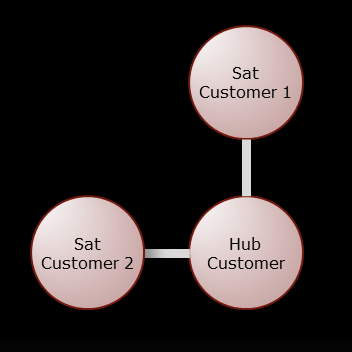
The datavault model consists of three basic entity types: Hubs, Links and Satellites. Hubs contains the business keys, Links connects the hubs and the satellites contains the descriptive data about the businesskeys. Together, they build up the Datavault model.

Hubs

As said earlier, Hubs are the business keys, an unique list as Dan Linstedt states in his book "Supercharge your Data warehouse". The Hub is a single table with one or multiple columns with businesskeys. It records the business keys and stores them uniquely. Examples are Social Security Number, LicenseNumber, VehicleIdentification, EmployeeNumber, etc.

And in the process building a Datavault model it's the first step to determine the businesskeys and the correpsonding Hubs. During the analysis of the businessproblem you go and try to find a proper businesskey. 

Here is the first diagram with the Hubs. I've also adapted the color scheme of Datavault.


Links

Links defines the relation between the businesskeys. They give the datavault model the flexibility to extend with other concepts. This type of Datavault entity gives the ability to extend the model in the future when new data should be integrated in the model. This really enhances the maintenance of the model. Examples of this type of Datavault entity are Customer/Sales or CustomerCategory/Category. 

The second step designing the Datavault model is determining the Link entities. These tables are n:m associative entities that are in fact n:m relationtables. This has a little drawback because you can'see on the outside of Link entity whether the underlying logical model is in fact a 1:n relation. This information is implicit. But, it gives you also an advantage. When the relation changes from 1:n to n:1 the Datavault model still remains the same.

Here is the Datavault model with links added


Satellites

Satellites addse descriptive information to the model. These tables contains the descriptive information and the history of the datavault model. These tables gives your model the datawarehouse capability.  Examples are Customer information like name, address, telephonenumber or Sales information like Orderdate, Amount, etc.


Concepts

Dan talked about this in his book and is more in detail described in the book of Hans: Concepts. Concepts are comparable with entities in the logical model. For instance, Customer, Sales, Employee, EmployeeCategory. In the physical model they do don't have any meaning but they help you understand the datavault model. 


Concept Constellations

A new idea is Concept Constellation by Hans Hultgren described. This groups the different concepts together into a higher level meaning. For instance, suppose we have the concepts Employee, EmployeeCategory, EmployeeWhatever, these concepts tell you something about the Concept Constellation Employee. Employee is a higher level definition of all the Hubs, Links, Satellites stores all the information of the different aspects of  an Employee.


Conclusion

This blogpost describes the basics of the Datavault modeling. There is a lot more information available about other types of tables but they all are based on these three types of tables. The strength in the model is by separating the business keys, relations and descriptive information flexibility is introduced. As I'll show you in future blogposts you can easiliy add new descriptive information (satellite) or new concepts to the Datavaultmodel (link).

Greetz
Hennie

zondag 4 maart 2012

Four different datamodeling methods

Introduction
Most of the time, 3NF are datamodels that are used in transactional systems like an orderentry application. For datawarehousing we had until a couple of years ago the (historized) 3NF and the starschema. Since a couple of years there are some new kids in the datawarehouse town: Datavault modeling and Anchor modeling. These datamodels try to deal with the disadvantages of 3NF and starschemas.

We are starting to learn that the starschema is more an end user datamodel that is easily understood by end users. It's a high performance model. Datavault modeling and Anchor modeling are more focussed on storing the right information in such a way that you achieve agility, speed of development and auditability. There are more reasons but i don't want to elaborate too much.

At first i wanted to write down a successor of my first blogpost about Anchormodeling but soon the blogpost became more and more an overview of the four types of data modeling techniques. I hope to write more about anchormodeling in next blogposts.

In this exercise i'll use the 3NF datamodel of the AdventureWorks2008LT Database . This is a simplified database of the large SQL Server AdventureWorks 2008 database. You can find this LT database on the site Microsoft codeplex. There isn't a SQL Server 2012 version available yet, as far as i  know. I'll transform this 3NF datamodel into a Datavault model (As i've blogged earlier), a anchor model and a starschema model.

Adventureworks2008LT  (3NF)
Below a representation of the 3NF datamodel as i've analyzed from the Adventureworks2008LT database. There are a couple of transaction tables (SalesOrderHeader and SalesOrderdetail) present and some master data tables (Customer, Productdescription, productcategory, etc). At first sight there seems no reference data in the diagram.


Adventureworks2008LT (3NF) in more detail
Below the database in more detail. I've decided to leave the errorlog and buildversion out of the models.


The Datavault model
As mentioned in my earlier blogpost i've used Quipu as a tool to generate the datavault model from the Adventureworks2008LT database. This tool can be downloaded, for free. The datavault model that is generated by Quipu is a typically source datavault model. You can find more information about this discussion at the blog of Ronald Damhof.

Now, the model that is generated is shown in the diagram below. The blue tables are the links, the orange tables are hubs and the yellow ones are the satellites. I've organized the diagram in a way that it looks like as much as possible as the Adventureworks2008LT 3NF model.


At first sight, you'll see that the number of tables are more than the 3NF model. That  is because the relations have become a table (link), the busineskeys have become a seperate table (hub) and the descriptive fields are stored in another table (sat). In my opinion the main advantage of this model is that you can increase agility and speed of development by separating the relations, business keys and the descriptive fields. Auditability seems to me a derived advantage of the agility argument: a historized 3NF datawarehouse datamodel is also auditable. But because the datavault model is more flexible that the 3NF model you can achieve the auditabilty much easier and faster than the historized 3NF datamodel.

The Anchor model
Below you can see a first draft of the Anchor datamodel. In my former post i've briefly explained a piece of the anchor modeling technique. I'm currently investigating this modeling technique for usage in my projects. It seems an interesting technique. The agility is pushed to the extreme because every field in a source table is a table in the anchor model. You can imagine that this enhances maximum flexibility.


The Adventureworks2008LT 3NF model is exploded into a huge number of tables in the anchor model. A good naming convention is very very appropriate. Even better, a tool should be available to manage the tables. In a future post i'll show the tables that are created and i can tell you now that the 9 tables in the 3NF model are about 100 tables in the anchor model (depending of the number of attributes in a table in the source model).

The diagram is created on the site http://www.anchormodeling.com/ and although it's a great solution and it looks great there are some disadvantages. It took me quite some time to create the datamodel.

The starschema
Below an example is shown of a starschema based on the Adventureworks2008LT 3NF datamodel. There are a couple of directions possible depending on the business process you're supporting. I've chosen to model it like this but you could also combine the SalesOrderHeader and the SalesOrderDetail in one fact. Or you could remove the snowflake table Category and move it to the fact. So depending on your (future?) business question you determine the starschema model.

In this example i've decided to split the SalesOrderHeader and SalesOrderDetail table in two facts. The SalesOrderHeaderDD is the link between the two facts. There are a couple of  difficult relations in the AdventureWorks2008LT 3NF model:
  • The relation product-Category.
  • The n:m relation between the productmodel and the Productdescription entity.
  • The relation between customer and address (CustomerAddress).


I've decided not to model the Customeraddress in the model. I've also decided to model the other difficult relations in the same way as the 3NF datamodel, resulting in a snowflake relation and a bridge table solution. Off course there are other decisions possible.

Conclusion
First, this blogpost started in my mind with a successor of the anchormodeling blogpost but later on i've decided to rewrite the blogpost to a overview blogpost of the four datamodels i'm interested in. I hope it gives an overview of the models.

So in my opinion we have now the following options to model a datawarehouse:

  • Historized 3NF model.
  • Datavault model.
  • Anchormodel.
  • Starschema.

From these options it seems that for a data storage foundation the best solution is datavault model or the anchor model. For enduser reporting and cube design the starmodel seems the most optimal solution. The main problem of the historized 3NF model is that the cascading changes that can happen and therefore this model is not the best option (in my opinion).

Greetz,

Hennie

dinsdag 12 april 2011

Why datavault will diminish the Kimball architectures.

Hi, in 2010 i started to collect more in-depth knowledge of the datavault modeling. Most of the Datavault folks know the TDAN articles of Dan Linstedt,  Dan blogs, the linkedin datavault discussions and Dan wrote a technical book about Datavault ("Supercharge your datawarehouse"). This year i succeeded for the Datavault certification of the Genessee academy. Still, i have to unreveal many areas of the datavault modeling (and anchor modeling) for a thorough understanding of the datavault.

After years and years building Kimball datawarehouses i'm convinced that the materialized star models will be more and more obsolete in the future due to hardware improvements like SSD's and Fusion techniques. In my opinion the only business case for (materialized) star modeling will be simplicity of the model (and perhaps the technical business case: it's easier to build cubes on pure star models (with dummy records)).

Because of the Self Service BI movement users will be enabled by the user friendiness tooling building easier and faster reports based on products like clickview and the new tool of Microsoft codename "Cresent" (and offcourse other SSBI Tooling). Building (easy) reports will be less and less important for the BI consultant. The easy- and medior reports will be build by the end (power) users. There are three reasons when the BI Consultant comes in to play and that is that reports needs scalability (enterprise wide), needs standardization or/and needs some certain amount of skills (the three S-esses). As the Kimball star models are positioned at the user side, less and less usage of the kimball datawarehouses will be inevitable. The end user BI tooling will be very powerful in such a way that sometimes a Kimball warehouses is not needed.

The main information delivery of a enterprise (and beyond) will be focussed on integrating data in a flexible way. (3NF) datamodels and starmodels were inflexible when changes were needed, rapidly. Changing the models caused sometimes errors, problems at the front end application, other databases that depended it on the datamodel, etc. With the datavault model more flexibility and agility is achieved. The datavault model is more error proof and will be the base or storing your enterprise data. Because of the principle "store facts not truth (one version...)" ALL data is loaded in the datavault resulting a auditable architecture because whenever the source changes KPI's can be recalculated in history(Type II principle).

The next step is building the starmodels, not physically but virtually. Starting point should be building them virtually unless the performance is bad. This way you are very flexible in building your starmodels. Perhaps a new manager wants another KPI or wants another calculation it's possible to recalculate this in the past (because you have kept all the information and used a Type II approach).

What do you think? Let me know.

Hennie

vrijdag 18 maart 2011

Datavault : The different definitions of Unit of work

Hi,

On March 11 and 12 i attended the certification class of Hans Hultgren (Genessee academy). In this certification class a subject was mentioned : "Unit of Work". During the course i've had difficulties understanding this subject. Questions that come to my mind are "What is a Unit of Work?", "When are entities collected in a UOW?", "What are the rules that define a Unit of Work?", etc. So in this blog i'll explain the "definition" of a UOW that is defined in the sheets of Datavault certification class. In the class an example was given of Category, Product and supplier entities and KABOOM you can create an UOW of this.


So here are the guidelines for creating of a Unit of Work (according to Hans):
  1. A Unit of Work defines a correlated set of data.
  2. A Unit of Work keep things together.
  3. A Unit of Work establishes consistency between arriving data and data stored in the Datavault links
  4. UOW should be consistent with the (Enterprise wide) business keys.
1. So what is correlated set of data? When you build a model with relations they are all correlated in a way. That's why you build a datamodel! So as a rule of thumb this can not be useful for determining a Unit of Work. 

2. Unit of Work keep things together? If you have relations between tables as on the left side of the diagram above, "things are together" by relations. So this doesn't seem a good rule of thumb to me either.

3. "consistency between arriving data and data stored in the DV".... In what way? I could imagine that that a process like for instance a order proces where a customer and product is mandatory, this information comes all at once because you can't have an order without a product or a customer. This seems more like it : "Information that comes to the datawarehouse at once because it's part of the process".

4. Guideline 4 doesn't define a Unit of Work in my opinion. IT's more a sort of constraint of a UOW.

Dan Linstedt touches UOW a bit in his book "supercharge your datawarehouse : Invaluable data modelling rules to implement  Your Datavault" like this :"Some business keys like bar codes are called: "Smart Keys" or "Intelligent Keys", meaning it's a key comprised of multiple parts. All parts must be kept together as an UOW (unit of work). The business utilizes the entire key as one unit (one identifier) to represent other information."

And he gives an example : MFG--ABC*123DEFIN2
Whereis:
Department = MFG
Product tpe = ABC
Model Number = 123D
Make = EFIN
Revision = 2
In this phrase it seems more a concatenated key (one identifier) that needs to be kept together in a "Unit of Work" and there is no more information about an Unit of Work in his book! This seems a bit awkward to me.

On a blog i've found the following definition:  "In Data Warehouse terms a Unit of Work is the definition of a load operation. Is eg. in the case of a mistake the whole batch rejected or is only the erroneous record disapproved? In a Data Vault a Unit of Work is a combination of a Hub and a Link".

Defintion of a load operation? If i'm reading this correctly this means that a UOW is sort of a batch where you load it all or nothing? Seems more like a 'Transaction' (ACID) where atomicity is important.

Yet another phrase on Unit of Work can be found on Dan Linstedts blog:  "Take the relationships (foreign keys) from the source model, and in relation to the PK – find out where to build a SINGLE LINK for each set of foreign keys, keep these keys together as a unit of work. Build your links in the target model". Interesting statement here. Does this say you need to look at one table and all the foreign keys are the Unit of Work? Isn't this a rather technical definition of a Unit of Work? Is every table with FK's a Unit of Work? I think not but then what is it???

Hmmmmmm..

Currently i'm dropping some questions in some discussion groups to gather some more information about this subject. I hope to understand this subject in a better way. I let you know what findings are.

Greetz,
Hennie

dinsdag 18 januari 2011

Linstedts videos and his first bookchapters about Datavault

On Learndatavault.com it's possible to download some chapters about Dan Linstedts new book. It's also possible to see some videos about the datavault method and modeling. In this post I'll outline the most intersting subjects that he introduced or are new (in my opinion).

Ontology
One interesting issue is that Linstedts introduces ontologies. Wikipedia defines Ontology "as the philosophical study of the nature of being, existence or reality as such, as well as the basic categories of being and their relations. [...]Ontology deals with questions concerning what entities exist or can be said to exist, and how such entities can be grouped, related within a hierarchy, and subdivided according to similarities and differences". Initially i didn't quite understand why Linstedt uses this terminology, but when i visited Wikipedia and saw this picture, a resemblance with DV is there.
Linstedts says that learning warehousing, applying and using ontologies is a critical succes factor for handling, managing and applying unstructured data to a structured datawarehouse. I asked him some questions about ontologies:
  1. Is a ontology model a logical model? And DV a physical model?
  2. What does the ontology model add more than the existing model techniques?
  3. Why did you mention that ontology is a critical succes factor for building a datawarehouse in your first chapter?
Here are the answers from Dan:
1)  "In a way, yes, I see different ontologies as different logical models, the DV is “most often” a Physical model. The ontology model adds understanding of the terminology. It provides IT with a way to communicate the model to business users, and to get “order of importance” from business users. You see, business users fight over the definitions of their terms, not just because they USE them differently, but also because they each have a “different ontology” in their heads to represent the data. If you can show a common consistent reference model (ontology), then the level of understanding by business users greatly increases, and there is less arguing about how to define master data. Just remember: there are many different ontologies that can be applied to the same physical model."

2) "I relate ontologies/taxonomies to the Terminology or metadata we use to build data models. If you understand your business terms, or concepts, you can use those to create the hierarchies based on Importance and Classification. These metadata (business terms) are often what we call a logical model when we build a data model. On the other hand, since the Data Vault is based on Business Keys for a start, you can more effectively get the business keys for each conceptual layer in the hierarchy that you build."

3) "I say critical success factor because of the impact it has on communication between IT and business stakeholders. If the stakeholders understand WHAT your building, they can more easily buy-in. They will feel more comfortable, and will usually no longer care HOW it’s built (ie: DV model) – as long as you’re flexible in the near future. Using an ontological representation of the model helps IT with transparency of the DV project. it also can serve as a modeling guide for what data is available to reports and so on. I’ll write up an example in the near future, as that would make another great video.
I did not mean to state that a DW project will fail without ontologies, maybe I used the wrong term to describe them. What I really meant is what I stated above, an increase in the chance of success if your money holders understand what your building, and you give them a way to think about it."
As i already said there is a resemblance between ontologies/taxanomies and datavault, but what i would like to see some real world examples how these two models are related.

The steps to be taken to build succesful datavault models
In Linstedts videos he explains the following steps that need to be taken when you are developing a Datavault model:
  1. Identify the hubs. The hubs are used for tracking and identifying key information
  2. Identify the master data setup. Linstedt says that you have to discover the hierarchy in your business keys with an ontology in order to learn the dependiencies of the dataset. There are a lot of views of ontologies of the business possible.
  3. Identify transactions and relationships to model link structures. Links are associations or transactions.
  4. Identify and model your satellites based on frequency of data change.
This is in contrast with the TDAN articles of Dan Linstedt, published earlier :
  • Model the hubs
  • Model the links
  • Model satellites
  • Remodel the satellites (Monster/mini)
It seems there is shuffle between the steps. The interesting step that catches my eyes is step 2 in the new program (identify the master setup). This issue has a relation with the first point in this post: ontology. Step 2 is about ontologies (Master data and their relations to each other).

MetaFields
From what i've seen from the videos there are a couple of metafields available in every table. As it seems there are some little changes in the way Datavault deals with metafields. The standard as 'defined' (where?) until the videos of Dan Linstedt was that there were a couple of metafields available:
  • Load date source (LDTS).
  • Record source (RSRC).
As it seems now Dan added a new metafield : Load Enddate Datasource (LEDTS). This fields ends the validity of a record. It means that a new record is added to the table and the old record is obsolete. In a discussion i've read there are also more meta fields discussed in the courses of Datavault (hope to join one very soon) and these are:
  • Last seen datetime. This would indicate whether a source are 'drying up'. Not sure what this means exactly. Hope to find out soon.
  • Event datime. This is the data of the actual change in the source (different from LDTS).
In the datawarehouses i've developed so far, i've add the following metafields (and some not):
  • Creationdate (same as LDTS).
  • Expiration date (same as LEDTS).
  • Deletiondate (only possible with CDC/triggers or full load).
  • Current Yes/No.
  • Versionnumber (this indicates whther how much times a satellite changed).
Just some thoughts...

Greetz,
Hennie